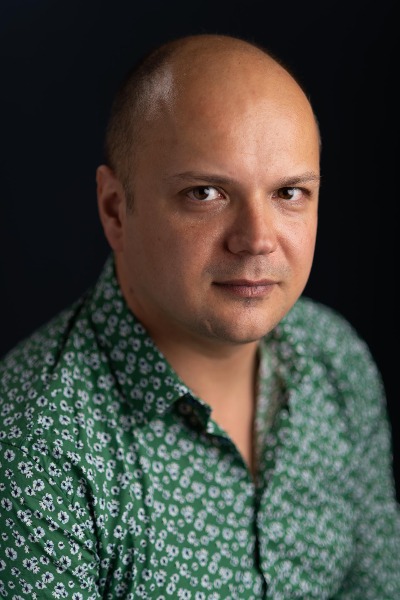
Jan Zienkowski
Université Libre de Bruxelles
-
- Professor of discourse and communication studies at Université Libre de Bruxelles (Belgium).
- Research focuses on discourse and its relation to processes of ideological (mis)recognition and the construction of socio-political imaginaries.
- Particularly interested in metapolitical controversies in civil society and in the media at the Centre de Recherches en sciences de l’Information et de la Communication (ReSIC / ULB). He is a long-standing board member of the DiscourseNet association.
- Associated researcher of DESIRE (Center for the Study of Democracy, Signification and Resistance / VUB) and Engage (Research Center for Publicness in Contemporary Communication / Université Saint-Louis – Bruxelles).
Discourse and the construction of illiberal orders of (mis)recognition
Critical work in academia has become the target of a metapolitical attack that problematizes supposedly delusional ‘woke’ or ‘elite’ ideas on identity, gender, social justice and democracy (Ege & Springer, 2023; Finlayson, 2021). While critical discourse scholars traditionally take pride in their capacity to politicize aspects of sedimented social reality, their own activities are now called into question as ideological and misguided forms of liberal and left-wing propaganda. At the same time, critical forms of knowledge are systematically called into question and silenced by authoritarian actors across the globe.
Far-right, libertarian, and reactionary voices now critique the very vocabulary of critical social science. Gender theory gets reframed as ‘ideology’, critiques of nationalism become a form of collective self-hatred, and research that acknowledges minority experiences and perspectives gets disqualified as a delusional and political correct form of activism. Critical discourse scholars do not enjoy a monopoly on reflexive and critical discursive practices. Other worlds are not only imagined in critical social science but also in reactionary circles of right-wing populists, techno-libertarians and other opponents of (liberal) democarcy (Kølvraa & Forchtner, 2025). What reflexive attitudes should critical discourse analysts develop and adopt in such a context? What concept(s) of democracy should they mobilize as a basis for social and political critique? How can they avoid an ethically relativist position and distinguish their own mode of critique from the type of critique practiced by reactionary voices in the public debate. This paper calls upon discourse scholars to examine the metapolitics of contemporary controversies (Zienkowski, 2018). By focusing on anti-woke discourses about cultural warfare, it draws attention to the metapolitical imaginaries that underpin the so-called ‘culture wars’.
The author will argue that theories of (mis)recognition (Herzog, 2016, 2021) and studies of the imaginary provide analytical and ethical lenses for criticizing iliberal and anti-democratic projects from. In doing so he calls for a renewed dialogue between critical discourse studies and neighbouring critical perspectives in the social sciences and humanities.
References:
Ege, M., & Springer, J. (2023). The Cultural Politics of Anti-Elitism (1st edn). Routledge. https://doi.org/10.4324/9781003141150
Finlayson, A. (2021). Neoliberalism, the Alt-Right and the Intellectual Dark Web. Theory, Culture & Society, 38(6), 167–190. https://doi.org/10.1177/02632764211036731
Herzog, B. (2016). Discourse analysis as social critique. palgrave Macmillan.
Herzog, B. (2021). Authoritarianism as pathology of recognition: The sociological substance and actuality of the authoritarian personality. Humanities and Social Sciences Communications, 8(1), 135. https://doi.org/10.1057/s41599-021-00819-5
Kølvraa, C., & Forchtner, B. (2025). Imagining alternative worlds: Far-right fiction and the power of cultural imaginaries. Routledge.
Zienkowski, J. (2018). Politics and the political in critical discourse studies: State of the art and a call for an intensified focus on the metapolitical dimension of discursive practice. Critical Discourse Studies, 1–18. https://doi.org/10.1080/17405904.2018.1535988